

1 Quick Answer
Egg freezing is not pain free, but it is usually manageable.
Most women experience temporary discomfort rather than severe pain.
The most uncomfortable parts are:
- Daily hormone injections
- Bloating and heaviness before egg retrieval
Egg retrieval itself is done under sedation or anaesthesia, so you do not feel pain during the procedure.
Discomfort is real, but it is temporary and closely monitored.
2 What “Pain” Means in Egg Freezing (Important Reframe)
When women ask, “Is egg freezing painful?”, they are often using one word to describe many different sensations.
Clinically, pain is not the same as discomfort, pressure, bloating, or emotional unease.
Egg freezing involves some discomfort and pressure, especially during the stimulation phase, but severe pain is uncommon.
Why egg freezing pain is often misunderstood:
- Online stories tend to highlight extreme or complicated cases
- Anxiety heightens bodily sensations
- Anticipation can amplify normal discomfort
From a medical perspective, doctors assess pain on standard clinical scales. Most egg freezing symptoms fall into the mild to moderate range and resolve quickly.
Fear is understandable. It just should not be fed by misinformation.
3 Are Egg Freezing Injections Painful?
Injection fear is the most common concern women raise before starting.
Egg freezing injections are small subcutaneous injections, given into fatty tissue, usually the lower abdomen or thigh.
What they typically feel like:
- A brief sting or pinch
- Mild burning for a few seconds
Occasional soreness or bruising
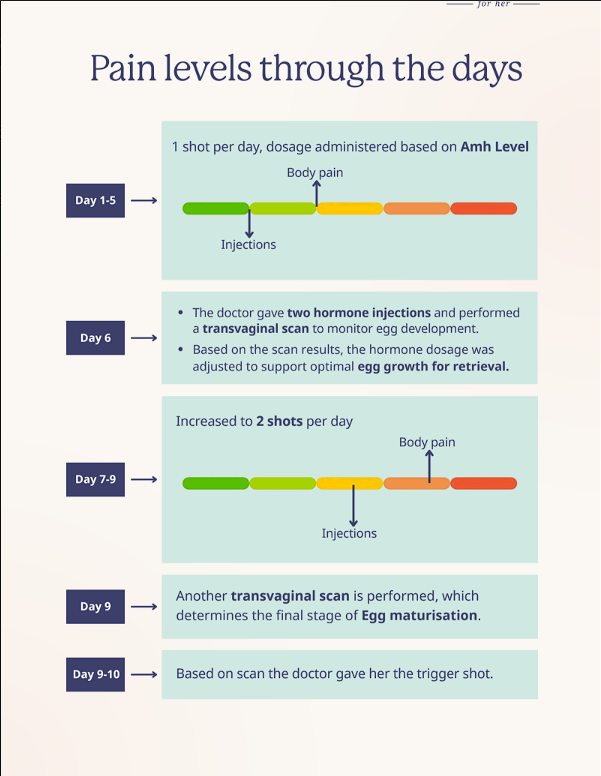
What surprises many women is how quickly the fear drops after the first one or two days.
Medically, these injections do not cause deep pain because:
- The needle is very thin
- Medication goes into fat, not muscle
- The volume injected is small
Clinics provide training, demonstrations, and ongoing support. You are not expected to figure this out alone.
4 How Does the Body Feel During the Stimulation Phase?
This phase lasts about 8 to 12 days and is where most physical discomfort occurs.
Common sensations include:
Bloating
This is the most frequently reported discomfort. As follicles grow, the ovaries temporarily enlarge, making the abdomen feel swollen or tight.
Heaviness or pressure
Many women describe a sense of fullness or weight in the lower abdomen, especially when bending, walking quickly, or exercising.
Mild cramping
Dull periods like cramps may occur intermittently.
Emotional sensitivity
Hormonal changes can increase emotional reactivity. This is a physiological response, not a personal failing.
These changes are clinically expected and monitored closely with ultrasounds and blood tests to ensure safety.
5 Is Egg Retrieval Painful?
This is the biggest fear and the least painful part of the process.
Egg retrieval is done under sedation or short general anaesthesia. You are asleep or deeply relaxed.
You do not feel the procedure itself.
From a medical standpoint:
- A fine needle retrieves eggs through the vaginal wall
- The procedure takes around 15 to 20 minutes
- You wake up in recovery, not during the procedure
After retrieval, some women experience:
- Mild pelvic soreness
- Period like cramps
- Light spotting
Most describe it as uncomfortable rather than painful. This approach is standard practice globally.
6 Egg Freezing Recovery: What Does It Feel Like After?
Egg retrieval is typically a day care procedure, meaning you go home the same day.
What the first 24 to 48 hours may feel like:
- Residual bloating that gradually subsides
- Mild lower abdominal tenderness
Fatigue from anaesthesia
Most women resume normal daily activities within one to two days. Many continue working during egg freezing, adjusting schedules only around scan days or retrieval.
Rest is advised if:
- Bloating feels uncomfortable
- You feel unusually fatigued
- Your doctor recommends it based on your response
Clear red flags, which are rare, are always explained before discharge.
7 Common Myths About Egg Freezing Pain
“It’s extremely painful.”
For most women, it involves discomfort, not severe pain.
“You’re bedridden for weeks.”
Recovery is usually short and measured in days.
“It damages your body long term.”
Egg freezing does not permanently harm ovaries or fertility.
Fear driven narratives spread faster than balanced medical information, often delaying decisions unnecessarily.
8 Who Might Experience More Discomfort?
Pain perception varies between individuals.
You may experience more discomfort if:
- You have a higher ovarian response
- You are sensitive to hormonal shifts
- You feel anxious around medical procedures
- You have a lower pain tolerance
This does not mean something is wrong. Fertility specialists adjust protocols, medication doses, and monitoring schedules to suit individual bodies.
Egg freezing is personalised medicine.
9 How Doctors Minimise Pain During Egg Freezing
Discomfort is anticipated and managed proactively.
Doctors reduce pain by:
- Choosing individualised stimulation protocols
- Adjusting hormone dosages
- Monitoring hormone levels and ovarian response
- Timing egg retrieval carefully
- Using anaesthesia during retrieval
- Offering structured recovery support
Feeling informed and supported significantly lowers perceived pain by calming the nervous system.
10 Why Proactive For Her
At Proactive For Her, egg freezing care focuses on transparency rather than false reassurance.
What women value most:
- Doctor led egg freezing programs
- Clear counselling before starting
- Honest expectation setting
- Pain managed egg retrieval under anaesthesia
- Ongoing injection support, not just instructions
- Multiple clinics across Bangalore
- Trusted by over 50,000 women
- Non judgmental, pressure free care
Many women report that their fear reduced after the first consultation, not because discomfort was dismissed, but because it was explained clearly. Book your egg freezing assessment now