

Lower abdominal cramps, white discharge, and a missed period can be confusing because these symptoms overlap across PMS, early pregnancy, and hormonal conditions. Mild cramps may happen before menstruation, while white discharge can increase due to progesterone. Early pregnancy can also cause mild cramping and increased discharge. However, these symptoms cannot confirm pregnancy. If your period is late and pregnancy is possible, take a pregnancy test. Seek urgent medical care if you experience severe or one-sided pain, fainting, dizziness, or heavy bleeding.
Understanding the Three Symptoms Together
A missed period doesn’t always mean something is wrong. According to Mayo Clinic any normal cycle can be anywhere from about 21 to 35 days. It can shift by a few days from month to month because of stress, travel, illness or changes in sleep. A period is usually called “late” when it hasn’t arrived several days after you expected it.
Lower abdominal cramps before a period often feel like a dull ache, pressure or tightness just below the belly button. Sometimes the ache spreads to the lower back or thighs. It happens when the uterus starts preparing to shed its lining.
White vaginal discharge is usually a healthy sign. Normal discharge is clear to milky white, has little or no smell, and changes in amount and thickness through your cycle. It’s your body’s natural way of keeping the vagina clean and protected.
Why do they show up together? The same hormones control all three: estrogen and progesterone. When these hormones rise, fall or shift in timing, you can feel cramps, notice discharge changes, and have a delayed period all at once.
Important: Having all three symptoms does not point to one diagnosis. It’s a pattern that many different situations, most of them harmless, can cause.
Why Do You Have Lower Abdominal Cramps but No Period?
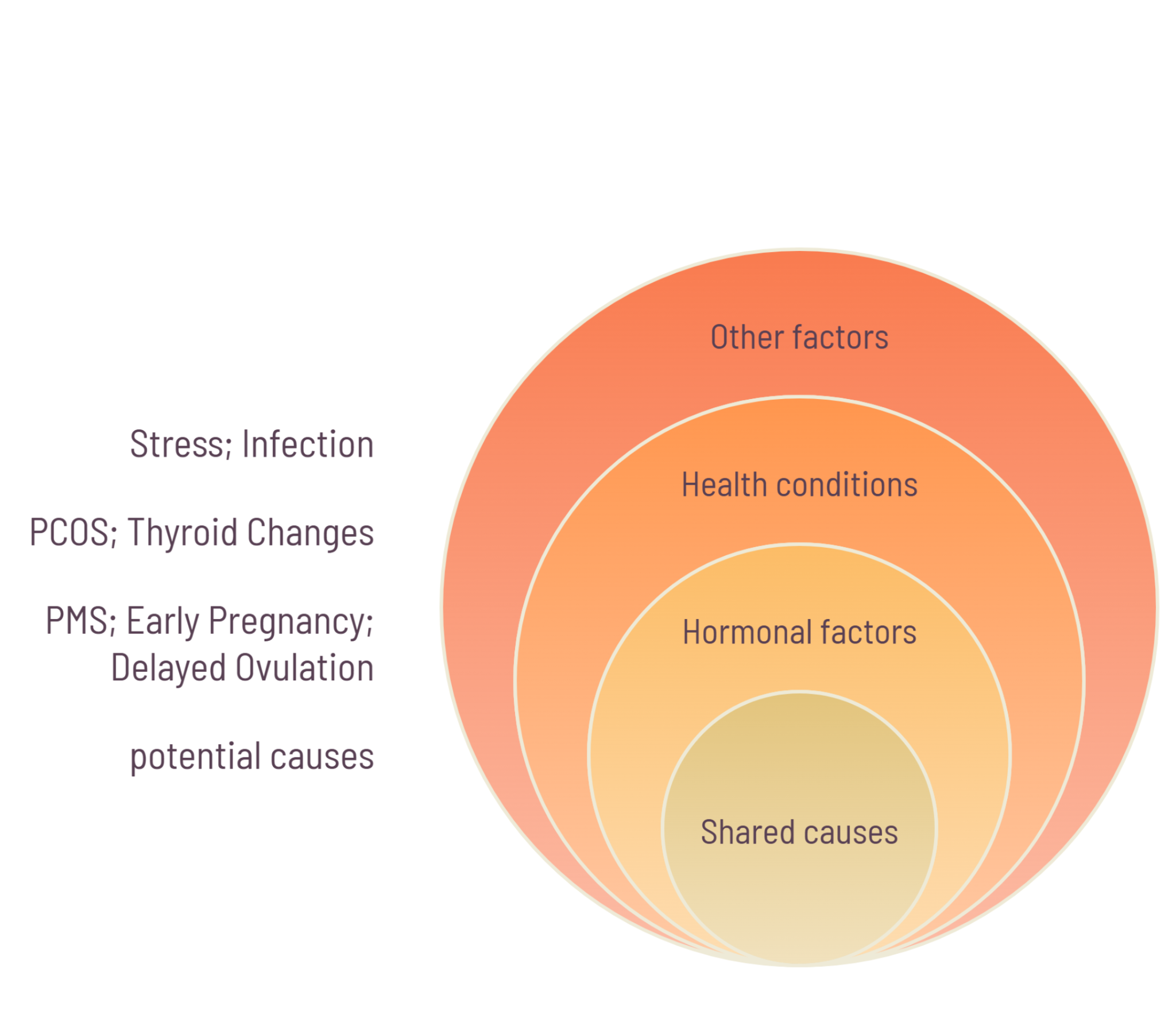
Feeling period-like cramps without any bleeding can be confusing. Here are the most common reasons:
- PMS: Your body may be getting ready for menstruation. Cramps can start several days before bleeding.
- Delayed ovulation: If you ovulate later than usual, your whole cycle shifts, and your period arrives later too.
- Early pregnancy: Some people feel mild cramping in the first weeks of pregnancy.
- PMOS: This can cause irregular ovulation, so periods may be late or skipped.
- Stress, poor sleep or big lifestyle changes: Exams, work deadlines, travel, intense workouts or crash dieting can all affect the hormones that control your cycle.
- Thyroid changes: An underactive or overactive thyroid can make periods irregular.
- Digestive causes: Constipation, gas or bloating can feel surprisingly similar to period cramps.
- Urinary or reproductive tract infections: These are more likely if you also have burning when you pee, unusual discharge, or fever.
Can Early Pregnancy Cause Cramps and White Discharge?
Yes, it can. But it doesn’t always.
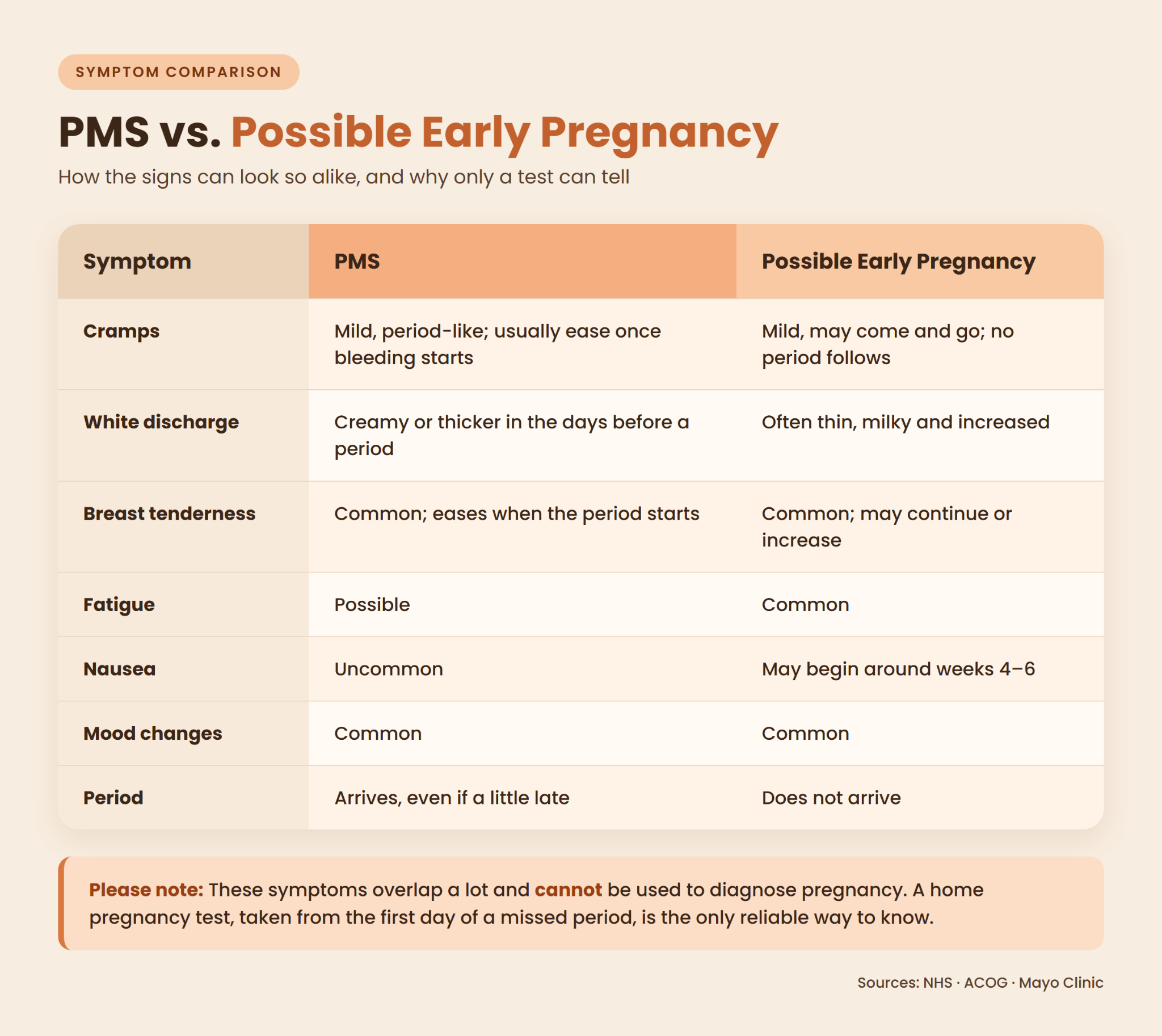
In early pregnancy, higher estrogen and progesterone levels can increase vaginal discharge. This thin, milky discharge is sometimes called leukorrhea. Some people also feel mild cramping or a pulling feeling as the uterus begins to change
You may hear that cramps are a sign of “implantation.” Cramps are not a reliable sign of implantation, and many people who are pregnant never feel it.
Early pregnancy symptoms are very different from person to person. Other possible signs include:
- Breast tenderness or swelling
- Unusual tiredness
- Nausea, with or without vomiting
- Needing to pee more often
Many of these overlap with PMS. That’s why symptoms alone cannot confirm pregnancy. Only a pregnancy test can tell you.
Cramps and White Discharge Before Period: Is It PMS?
Very often, yes.
After ovulation, your cycle enters the luteal phase. In this phase, the hormone progesterone rises to prepare the uterus for a possible pregnancy. Progesterone can make discharge thicker, creamier or whiter.
As your period gets closer, the uterus releases chemicals called prostaglandins. These make the uterine muscles tighten, which causes those familiar period-like cramps. As per the NHS PMS symptoms can start several days to two weeks before bleeding.
Why does it feel different this time? When your period is late, symptoms you normally have before your period just go on longer. That can make ordinary PMS feel strange or worrying, even though it’s the same thing your body always does.
Typical PMS cramps are mild to moderate, feel like your usual period pain, and get better with rest, warmth or the pain relief you normally use. Pain that needs attention is severe, gets worse, is mostly on one side, or comes with fever, dizziness or heavy bleeding.
Other Reasons for a Missed Period with Lower Abdominal Pain and White Discharge
Sometimes something other than PMS or pregnancy is behind it:
1 PMOS: Irregular or absent ovulation can cause late periods, pelvic discomfort and discharge changes.
2 Thyroid disorders: Both low and high thyroid levels can disrupt your cycle.
3 Stress and weight changes: Sudden weight loss or gain, or long-term stress, can pause ovulation.
4 Vaginal infections:
- Yeast infection: thick, white, “cottage cheese” discharge with itching or burning.
Bacterial vaginosis (BV): thin, greyish-white discharge with a fishy smell.
5 Urinary tract infections (UTIs): lower belly pain, burning when you pee, and needing to go often.
6 Pelvic inflammatory disease (PID): an infection of the reproductive organs that can cause pelvic pain, unusual discharge and fever. Mayo Clinic describes pelvic inflammatory disease (PID) as an infection of the female reproductive organs that can cause pelvic pain, unusual discharge, and sometimes fever.
7 Ovarian cysts and other pelvic conditions: these can cause one-sided pain, pressure or irregular cycles.
Not every cause produces all three symptoms. Depending on what you describe, your doctor may suggest a pelvic exam, urine test, pregnancy test or ultrasound to find the real reason.
How to Know If You Are Pregnant
A home pregnancy test is the simplest, most reliable first step.
- When to test: Most home tests are reliable from the first day of your missed period
- If you don’t know your cycle dates: Test at least 21 days after the last time you had unprotected sex.
- For best results: Use your first morning urine, and follow the instructions on the pack carefully.
- If it’s negative but your period still hasn’t come: You may have tested too early. Repeat the test in 3 to 7 days.
- Blood test (beta-hCG): A doctor may suggest this if home results are unclear, your cycles are irregular, or they need to track hormone levels.
- Positive test with pain: If your test is positive and you have abdominal pain, get checked promptly. A doctor can confirm that the pregnancy is in the right place.
When Should You Be Concerned About Lower Abdominal Pain?
Most cramps are harmless. Still, your body deserves to be taken seriously. Get urgent medical care if you have:
- Severe or worsening pain in the belly or pelvis
- Pain mainly on one side, especially if you could be pregnant
- Dizziness, fainting or unusual weakness
- Shoulder-tip pain along with belly pain or dizziness
- Heavy vaginal bleeding
- Fever, vomiting or foul-smelling discharge
If pregnancy is possible and you have abdominal pain, doctors will want to rule out an ectopic pregnancy. This is when a pregnancy grows outside the uterus, usually in a fallopian tube, and it needs urgent treatment
Please don’t panic, though. Most cramps are not ectopic pregnancy. The point is simply that these warning signs should never be waited out.
What You Can Do Next
Here’s a simple, calm plan:
- Note your dates: when your last period started and how many days late you are now.
- Take a pregnancy test if there’s any chance you could be pregnant.
- Track your cramps: where they are, how strong (1–10), and how long they last.
- Watch your discharge: any change in colour, smell, thickness, or itching.
- Don’t self-medicate: avoid antibiotics or antifungal medicines without a diagnosis. The wrong treatment can hide the real problem or make it worse.
- Act quickly on warning signs: if you notice any red flags above, get urgent care instead of waiting for things to settle.
Why Proactive For Her?
- Experienced female gynaecologists who understand what you’re going through
- Private, empathetic consultations in a judgment-free space
- Support for delayed periods, pelvic pain and vaginal health concerns
- Online and in-clinic options that fit your schedule
- Clear guidance on the right tests and treatment so you’re not left guessing
FAQs
1. Can early pregnancy cause lower abdominal cramps and white discharge?
Yes. Mild cramps and more white discharge can happen in early pregnancy because of hormone changes. But they also happen before periods, so they don’t confirm pregnancy. A pregnancy test is the only way to know.
2. Why do I have cramps and white discharge but no period?
Common reasons include PMS, delayed ovulation, pregnancy, hormonal changes, PMOS or an infection. Tracking your symptoms and taking a pregnancy test can help narrow it down.
3. Are cramps without bleeding a sign of pregnancy?
They can be, but not always. Cramps without bleeding also happen before a period or because of digestive, urinary or hormonal causes.
4. When should I take a pregnancy test if I have cramps but no period?
From the first day of your missed period. If your cycle is unpredictable, test at least 21 days after unprotected sex.
5. When are lower abdominal cramps an emergency?
Get urgent care for severe or one-sided pain, fainting, dizziness, shoulder-tip pain or heavy bleeding, especially if you could be pregnant.
Final Recap
Many different causes can bring a missed period, cramps and white discharge together. PMS, delayed ovulation, early pregnancy and hormonal conditions often feel the same and pregnancy test is the best way to check for pregnancy, not symptoms, Severe or unusual pain should never be ignored.